The Great Meme Reset of 2026: Why the Internet Is Returning to 2010s Humour
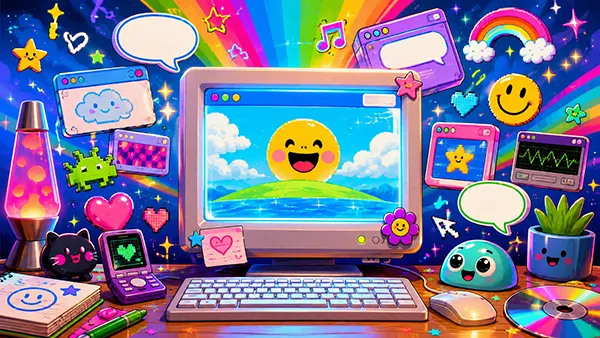
The Great Meme Reset of 2026 began as a half-serious proposal to make online jokes feel enjoyable again. Supporters called for a symbolic return to the meme culture of the early and mid-2010s, when Rage Comics, Advice Animals, Nyan Cat, MLG edits and familiar image macros could circulate for months rather than disappear after a weekend. The campaign did not erase newer humour on 1 January 2026, and no single group could have enforced such a change. Its importance lies elsewhere. It gave a name to growing frustration with disposable trends, automated-looking images, forced catchphrases and posts designed mainly to provoke a quick reaction. By the opening weeks of 2026, the idea had merged with the wider “2026 is the new 2016” trend, bringing back old photos, filters, songs and joke formats. What looked like a simple nostalgia campaign became a useful snapshot of how internet users now judge authenticity, effort and shared meaning in online comedy.
What the Great Meme Reset of 2026 Actually Was
The earliest widely documented use of the phrase came from a TikTok comedy sketch posted by @joebro909 on 13 March 2025. The video imagined a “great meme reset” as a response to the so-called Meme Drought, but it did not yet propose a return to 2016 or set a date for the change. The version recognised in 2026 took shape later. During the closing months of 2025, users began presenting 1 January 2026 as a symbolic deadline for abandoning tired “brain rot” jokes and reviving older formats. The idea spread through TikTok, Instagram, Reddit and X, where it was repeated with varying degrees of sincerity. Some participants treated it as a real community challenge, others as satire, and many enjoyed the contradiction of making a new meme about the need to stop making new memes.
The reset never had a fixed list of approved jokes. Posts commonly mentioned Rage Comics, Advice Animals, Nyan Cat, MLG Montage Parodies, Big Chungus and Ugandan Knuckles, even though these examples came from different years and different corners of online culture. Memes associated with 2016, including Harambe and Dat Boi, also became shorthand for the supposed high point of internet humour. The selection was historically untidy, but that was part of the point. Supporters were not building a museum archive. They were describing a style of comedy that felt easy to recognise, easy to alter and visibly made by another person. A familiar picture, a clear setup and a short punchline offered an immediate social exchange that did not require viewers to know several layers of rapidly changing slang.
When 1 January 2026 arrived, old formats did reappear, particularly in meme communities and throwback posts, but the internet did not switch back to an earlier era. The more lasting result was the rapid growth of the related “2026 is the new 2016” theme. People shared photographs from ten years earlier, reused bright filters, revived music and fashion references, and compared their 2016 selves with their lives in 2026. Know Your Meme recorded new Great Meme Reset examples on Reddit during the first days of January, while major publications reported that the broader nostalgia trend had moved beyond meme pages into celebrity posts and everyday social feeds. The reset therefore worked less like a clean restart and more like a temporary festival: a shared excuse to repost old material, test forgotten formats and discuss why the current internet often feels less personal.
Why “Brain Rot” Humour Created a Backlash
The expression “brain rot” became central to the reset because it already carried a widely understood criticism. Oxford University Press named it the Oxford Word of the Year for 2024 and later added it to the Oxford English Dictionary. In current usage, the term can describe both trivial online material and the supposed effect of consuming too much of it. It is often used jokingly rather than as a medical claim. Applied to memes, it usually refers to highly repetitive, deliberately nonsensical or context-poor content: distorted voices, strange characters, recycled sound clips, abrupt edits and phrases that become funny mainly through constant repetition. Some examples are inventive and knowingly absurd, but the label also covers mass-produced posts that imitate the surface of a trend without adding a fresh joke.
Frustration intensified during 2025 because users felt that meme cycles were being pushed rather than allowed to grow naturally. The Great Meme Reset was linked to complaints about the March 2025 Meme Drought and later arguments over “niche community” memes that spread in September. Critics described some of these trends as forced: a phrase or character would appear repeatedly across unrelated videos until familiarity was expected to create humour on its own. Generative tools made imitation even easier, especially for images and short clips designed around bizarre combinations. The problem was not absurdity itself; internet comedy has always relied on nonsense. The objection was that a great deal of material seemed interchangeable, with little evidence of a personal observation, a carefully chosen reference or a punchline worth remembering.
Older memes became attractive because they appeared to offer the opposite qualities. A successful Advice Animal or reaction image could be understood in seconds, yet the template left room for thousands of variations. Rage Comics used a small cast of faces to turn ordinary frustrations into miniature stories. Vine clips often depended on timing, voice and performance rather than sheer visual noise. These forms were not automatically clever, and the 2010s produced plenty of repetitive rubbish, but distance has filtered out much of the forgettable material. What remains in collective memory is a selection of the strongest examples. The reset was therefore partly a protest against low-effort engagement bait and partly the result of remembering an earlier internet through its highlights rather than through everything that was actually posted.
Why 2010s Memes Feel Different in 2026
Many popular 2010s formats were built around structural clarity. An image macro usually presented a recognisable character, a familiar situation and a line of text that changed the meaning of the picture. The viewer understood the rules before reading the new variation. That consistency made the joke accessible while still rewarding creativity. A good version could surprise people without forcing them to decode an entire private vocabulary. In 2026, this directness feels unusual because many current jokes arrive as fragments: a sound taken from one video, a caption borrowed from another trend and an image generated or edited to resemble a third reference. Layered humour can be rewarding for insiders, but it also expires quickly. Once the surrounding trend disappears, the individual post often loses most of its meaning.
The older formats also made participation visible. Users downloaded pictures, added captions, cut clips, recorded voiceovers and reposted variations across forums, blogs, Tumblr pages, Reddit communities and early short-video apps. The tools were often basic, yet the limitations encouraged recognisable choices. A badly cropped picture, an uneven font or a rough edit could become part of the charm because it showed that someone had handled the material. Current creation tools can produce cleaner results in seconds, but polish does not necessarily communicate personality. The reset reflects a desire for evidence of human involvement: not perfection, but a sense that a person noticed something, selected the right reference and shaped the joke for a particular audience.
Timing matters as much as format. During the 2010s, many memes travelled across several sites and remained usable long enough to develop shared rules. Different groups adapted the same image to school, work, gaming, relationships or politics. This gave a meme a common core while allowing local versions to flourish. By contrast, present-day recommendation feeds can accelerate a joke from obscurity to exhaustion within days. Fast circulation creates spectacular reach, but it can also reduce the time available for variation. Users see hundreds of near-identical copies before communities have developed richer interpretations. The Great Meme Reset cannot restore the slower conditions of the earlier web, yet it shows why people miss formats that behaved less like short-lived signals and more like flexible pieces of a common comic language.
Nostalgia, Identity and the Ten-Year Cycle
The choice of 2016 was not random. In 2026, the year sits exactly a decade in the past, which is long enough for styles to look distinct but recent enough for millions of people to remember them personally. Teenagers from 2016 are now adults, while younger users encounter the period through older siblings, archived videos and reposted images. The date also collects a remarkable number of cultural memories: Vine, Pokémon Go, the Mannequin Challenge, Snapchat filters, Musical.ly, Harambe jokes and the first season of Stranger Things. These references do not all belong to one coherent mood, but they now function as a compact label for a less polished, more colourful version of online life. The reset turned that label into a shared story about what the internet supposedly felt like before the 2020s.
Nostalgia is powerful because it links personal memory with group belonging. Psychological research has associated nostalgic reflection with social connectedness, gratitude, optimism and a sense of continuity between past and present. Meme nostalgia performs the same work in a public, playful form. Posting an old reaction image can signal age, taste and membership in a group without requiring a long explanation. Someone who recognises the reference responds not only to the punchline but also to the memory of where and when that format was used. This is why old jokes can feel warmer than technically sharper new ones. They carry traces of school group chats, gaming forums, early smartphones and friendships that may no longer exist in the same form.
Not everyone celebrating 2016 remembers it directly, and that does not make the trend meaningless. Online culture allows people to inherit memories through archives, compilations and repeated references. A younger user can feel attached to Vine humour or Rage Comics in the same way that music listeners adopt a decade they never lived through. This borrowed nostalgia is less about factual reconstruction than about choosing an alternative to the present. The imagined 2010s internet is seen as more spontaneous, less commercial and less saturated with automated content. That picture is selective: advertising, harassment, manipulation and algorithmic feeds were already major issues. Even so, the imagined past gives users a language for qualities they want now, including smaller communities, recognisable authorship and jokes that invite participation instead of passive scrolling.
What the Reset Changed and What It Could Not Change
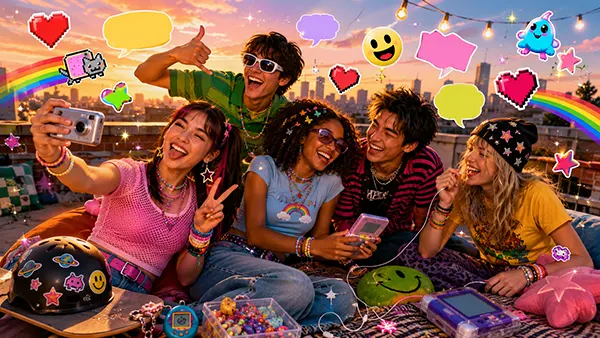
The most visible achievement of the Great Meme Reset was renewed circulation. Old templates returned to feeds, archive pages received fresh attention, and users who had never made a Rage Comic or MLG edit tried the formats for themselves. The campaign also helped turn a narrow meme debate into a broader 2016 revival. Throwback photographs, oversaturated filters, songs and fashion references became part of the same mood. This expansion explains why the idea travelled farther than a simple call to repost Big Chungus. It offered several ways to join: make an old-style joke, share a personal memory, criticise current trends or parody the reset itself. That flexibility kept the subject visible even after the original New Year deadline had passed.
The revival did not produce exact copies of 2010s culture. Most successful posts combined old material with current language, present-day events or self-aware commentary about the act of revival. A classic template might carry a caption about generative images, subscription fatigue or modern work habits. A 2016 photograph might be paired with a 2026 account of how the person’s life had changed. This mixture matters because memes survive through adaptation, not preservation. Repeating an old joke without alteration offers recognition but little surprise. Reusing its structure to express a current experience gives it a second life. The reset’s most interesting creations therefore treated the past as a toolkit rather than a rulebook.
There were also clear limits. No campaign can force millions of users to abandon current slang, stop enjoying absurd videos or reject automated creation tools. Recommendation systems still reward frequent posting, rapid imitation and strong immediate reactions. Commercial accounts can adopt a nostalgic style as quickly as individual creators, turning a grassroots signal into another marketing look. The reset also risked presenting one period of internet culture as universal when experiences differed by age, language, country and community. A person who spent 2016 on Tumblr remembers a different online world from someone who used Vine, Facebook, 4chan or regional forums. The reset could not recreate those separate environments, but it did reveal a broad wish for more variety and less dependence on a single dominant style of humour.
The Lasting Effect on Online Humour
By mid-2026, the most reasonable reading of the Great Meme Reset is not that it succeeded or failed completely. It worked as a short communal event and as a label for a wider change in taste. Old formats now coexist with “brain rot”, hyper-specific references, polished creator content and generative experiments. That mixture is likely to continue. Internet humour rarely moves in a straight line from one era to another; it recycles, mutates and argues with its own history. The reset made that recycling unusually visible. It encouraged users to compare not only which memes were funnier, but also how jokes were made, how long they lasted and what kind of participation they expected from the audience.
The trend may also strengthen interest in humour with a clearer human signature. That does not require intentionally poor editing or a ban on new tools. It means giving viewers something more specific than randomness: an observation, a character, a recognisable emotion or a surprising connection. Small communities are well suited to this kind of work because their jokes can grow from shared experience rather than from a universal attempt to attract attention. Private chats, fan groups, game communities and local-language pages may produce the most memorable memes of the next few years, even when their creations later travel much farther. The reset’s emphasis on older formats reminds creators that a joke becomes durable when people can both understand it and make it their own.
The return to 2010s memes is therefore less a retreat from the present than a request for better ways to use it. People are not truly asking to lose modern editing, faster communication or access to a global audience. They are asking for online comedy that feels authored, shareable and socially meaningful. The old templates provide useful lessons: establish a clear premise, leave room for variation, respect the viewer’s attention and allow the joke to carry an experience that others recognise. The Great Meme Reset of 2026 will eventually become another dated reference, just as the memes it revived once did. Its lasting value is the reminder that internet humour works best when circulation does not replace craft and when repetition builds a community rather than merely filling a feed.