
Casino Comedy After the YouTube Crackdown: What Creators Can Joke About Now

Online video culture has long treated casino content as a source of humour. Clips of dramatic wins, ironic reactions to losses, and exaggerated “lucky streak” stories regularly circulate across social networks. For years, creators built entire comedy formats around gambling moments. However, the tightening of YouTube policies regarding gambling references has quietly reshaped how these jokes are written and presented. By 2026, casino humour on video channels looks noticeably different: less direct promotion, fewer explicit links to unlicensed operators, and more creative storytelling that avoids moderation triggers.
Why YouTube Tightened Its Approach to Gambling Content
YouTube gradually strengthened its rules around gambling-related material after regulators and consumer protection groups raised concerns about the visibility of unlicensed betting services. The policy updates that began in the mid-2020s focused on restricting references to gambling providers that are not authorised in certain jurisdictions. Videos that include direct links, logos, or encouragement to use such services may face limited monetisation or age restrictions.
Another important factor behind these updates is audience protection. Video hosting companies increasingly face pressure to ensure that under-age viewers are not exposed to promotional material connected to gambling. As a result, many casino-related videos now fall behind age verification systems, which directly affects how creators structure their humour and storytelling.
The practical impact for comedy channels is clear: jokes built around showing a specific gambling brand, celebrating a big win on a questionable service, or encouraging viewers to try similar bets can lead to content being restricted. Creators therefore started adapting their formats rather than abandoning the subject altogether.
How Moderation Policies Affect Comedy Formats
Comedy traditionally relies on exaggeration and recognisable references. In gambling humour, this often meant showing the game interface, the operator name, and dramatic reactions to results. Under the updated rules, these elements can trigger moderation flags if they are connected with services that fall outside the allowed categories.
Because of that, creators began shifting towards indirect humour. Instead of showing the actual betting site, many sketches now recreate fictional casino environments or generic slot machines. The joke remains understandable while avoiding direct promotion or visual identification of real operators.
Another change involves editing style. Rather than broadcasting long gambling sessions, comedians increasingly focus on storytelling: a short narrative about chasing a win, a parody of “lucky strategies”, or a character-based sketch about someone convinced they have a secret system.
The New Language of Casino Humour Online
Restrictions rarely eliminate humour entirely; they simply redirect it. In recent years, casino-related comedy has shifted toward cultural commentary rather than direct gameplay footage. Instead of showing the spin itself, creators describe the emotional rollercoaster surrounding it. The punchline often lies in the contrast between expectations and reality.
Another noticeable shift is the rise of observational humour about gambling habits. Videos now focus on familiar situations: the friend who insists on one more round, the amateur statistician explaining probability after a loss, or the player who believes every near-miss is a sign of future success. These scenarios resonate with audiences while staying within moderation guidelines.
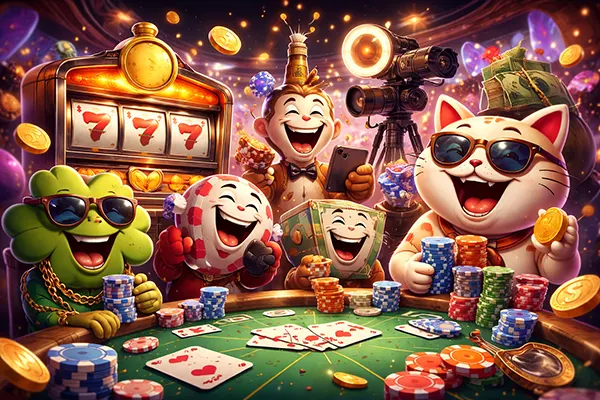
Animation and sketch comedy have also gained popularity. Animated shorts allow creators to parody casino culture without displaying real operators or interfaces. Characters representing “luck”, “probability”, or “the slot machine itself” provide a flexible framework for jokes that remain entertaining without violating content rules.
Memes, Reaction Clips, and Edited Comedy
Memes remain one of the safest forms of humour related to gambling. A screenshot of a fictional jackpot moment or a captioned reaction image can express the same idea as a real gambling clip while avoiding references that may trigger restrictions.
Reaction-based comedy is another format that adapted quickly. Instead of showing a gambling session, creators react to viral stories about improbable wins, strange betting superstitions, or historic gambling anecdotes. The humour emerges from commentary rather than the activity itself.
Edited comedy compilations have also evolved. Rather than including raw gameplay footage, editors often use stock graphics or fictional game screens combined with voice-over narration. This approach keeps the comedic pacing intact while reducing the likelihood of automated moderation.
How Creators Are Adapting Their Content Strategies
By 2026, experienced video creators treat moderation rules as part of the production process. Before publishing a video, they evaluate whether any visual element could be interpreted as promoting an unlicensed gambling operator. If so, they replace it with a neutral graphic or fictional example.
Another strategy involves shifting the focus from betting itself to the social behaviour surrounding it. Many popular sketches now revolve around conversations between friends discussing “lucky strategies”, probability myths, or stories about unforgettable casino visits. The humour lies in human psychology rather than the activity.
Creators also increasingly rely on narrative storytelling. A comedic monologue about someone chasing a “perfect streak”, for instance, allows the creator to explore gambling culture without showing any real gameplay or operator references.
What Casino Comedy May Look Like in the Future
Looking ahead, casino humour on video channels will likely continue moving toward satire and cultural commentary. Rather than focusing on the mechanics of gambling, comedians will explore the beliefs, rituals, and emotional reactions that surround it.
Another emerging direction is educational comedy. Some creators mix humour with explanations of probability or behavioural biases. By turning common gambling myths into jokes, they entertain viewers while also providing context about how chance actually works.
The broader lesson from the YouTube crackdown is that restrictions rarely end a genre. They simply force creators to be more inventive. Casino-related humour remains alive online, but the jokes now rely more on storytelling, character, and irony than on showing the gamble itself.